Theory
There is a reason
it feels beautiful.
Theory gives language to what the eye already senses. By observing structure in nature and applying it with intention, floral design becomes clearer without becoming less personal.
See the four principles
From seeing to making
Observation becomes useful when we can name what we see.
Atelier Flowerseat follows a simple process: observe a relationship, identify the principle behind it, then test that principle with flowers. The aim is not to copy nature. It is to understand how visual relationships work.
-
01
Observe
Notice the path of a line, the interval between forms, the pull of light and the way materials gather.
-
02
Understand
Name the relationship as direction, rhythm, contrast or grouping.
-
03
Create
Apply the principle selectively, then adjust it to the material, space and point of view.
Four principles
A practical language
for intentional design.
Each principle answers a different question: where the eye travels, how movement continues, what becomes visible, and how separate materials read as a whole.
01 · Direction
Direction guides the eye.

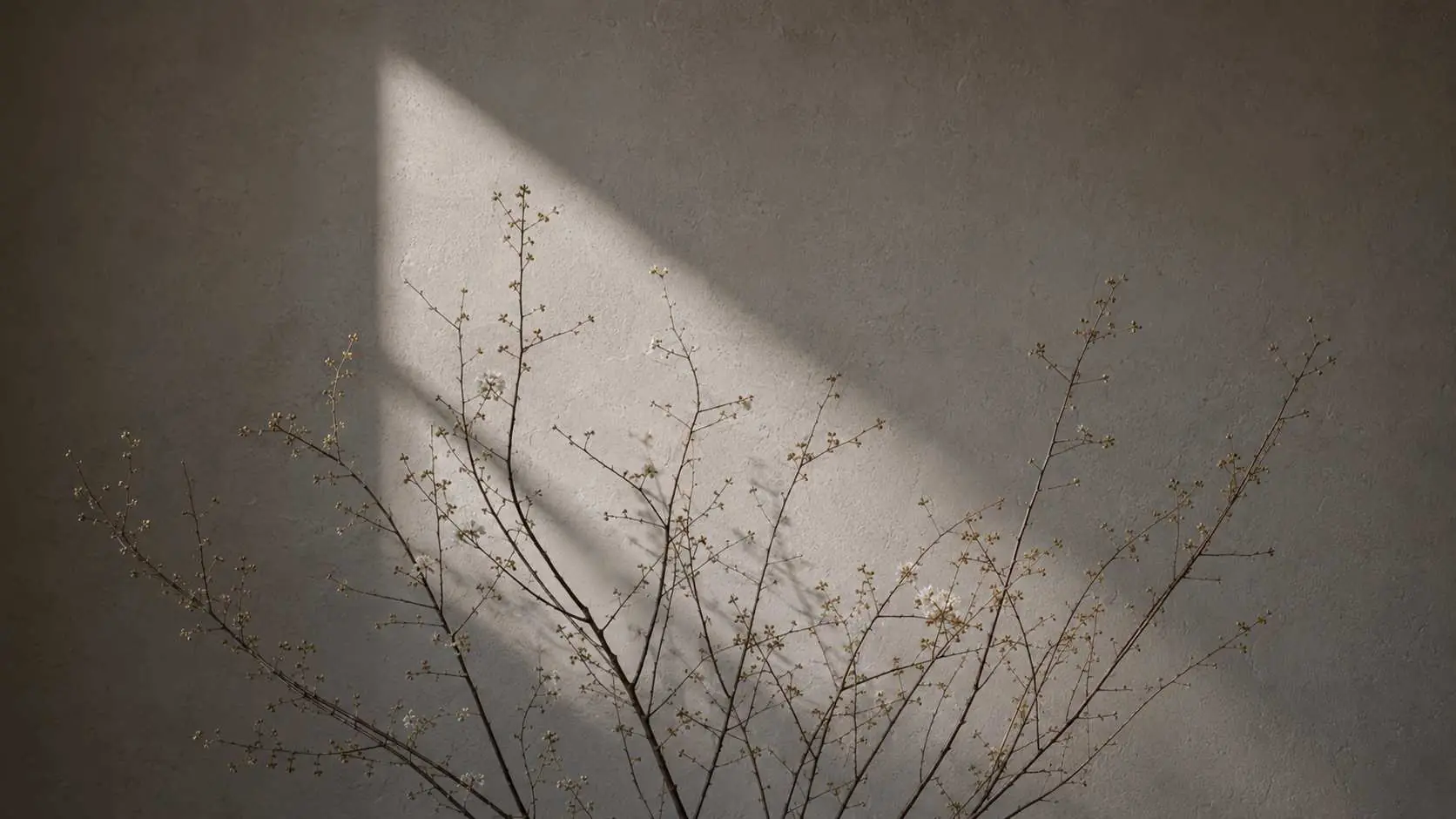
Every stem has an origin, an angle and a destination. Direction determines where attention begins, where it travels and where it comes to rest.
Use the angle of stems, the turn of blooms and the shape of empty space to establish one primary movement. Supporting lines can reinforce it or create a controlled counter-direction.
02 · Rhythm
Rhythm creates flow.
Rhythm is created by repetition and variation. Repeated curves, intervals, colors or forms allow the eye to anticipate movement while small differences keep the composition alive.
Repeat one visual element at least three times. Vary its size, spacing or angle so the repetition feels organic rather than mechanical.


03 · Contrast
Contrast gives depth.
Contrast clarifies difference. Light and dark, fine and bold, open and dense, smooth and rough become more legible when they meet.

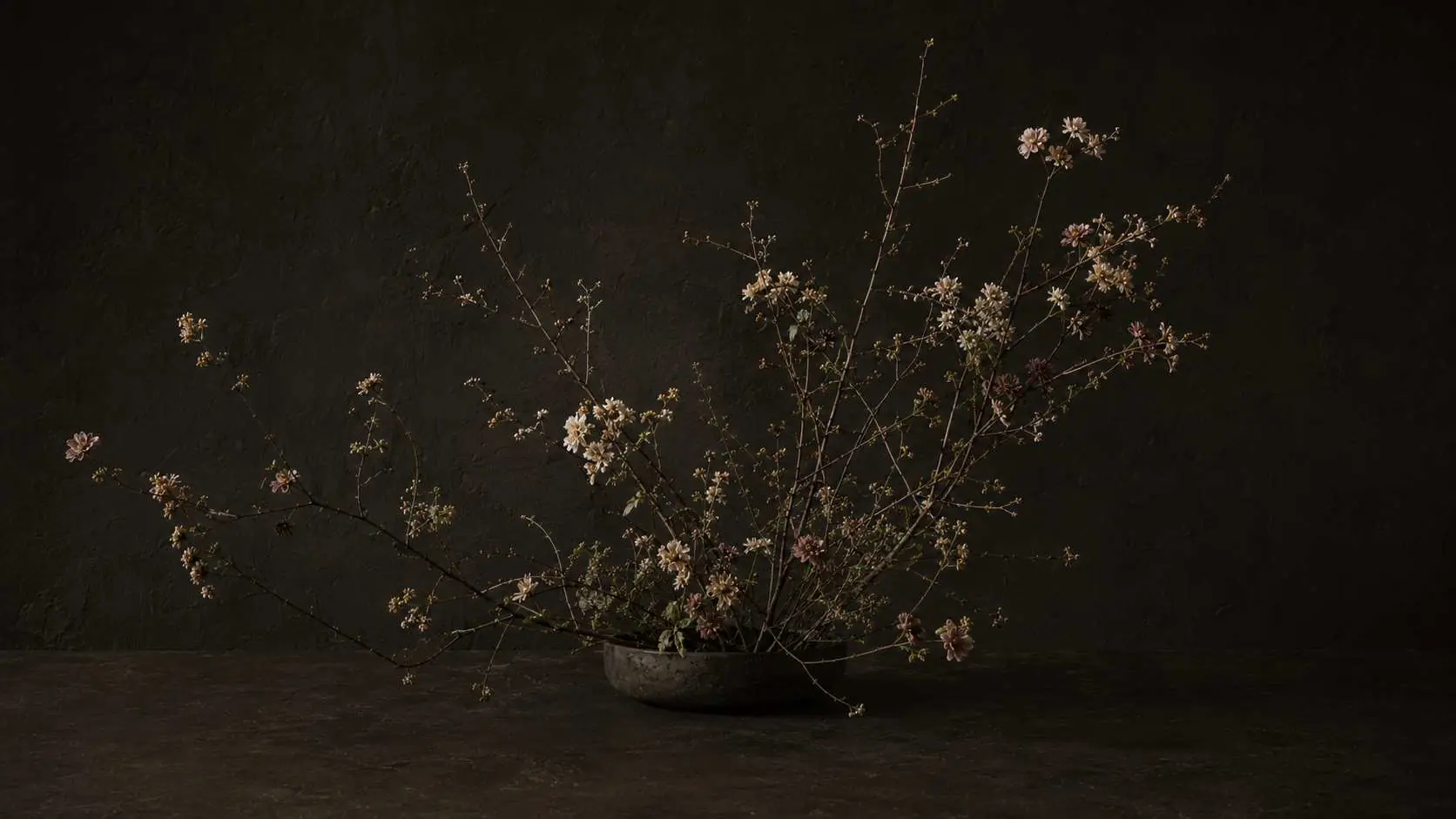
Choose one dominant contrast and use it to establish focus. Too many contrasts with equal strength flatten the hierarchy; one clear contrast gives the eye a place to begin.
04 · Grouping
Grouping creates structure.
Grouping brings similar materials into readable local relationships. It makes abundance easier to understand and gives each group its own presence within the whole.


Build two or three clear groups, vary their size and height, and leave enough negative space for their boundaries to remain visible. Here, cosmos and pampas stay distinct while sharing one upward movement.
Principles and freedom
Theory is a starting point,
not a formula.
Two designers can use the same principle and create entirely different work. Theory makes choices visible; judgment decides what to emphasize, soften, repeat or leave out.
Understand the principle.Then make it your own.
For professionals and teachers
Stronger judgment begins with better questions.
Instead of asking whether an arrangement is simply right or wrong, ask four precise questions.
- 01Where does the eye travel first?
- 02What repeats, and with what variation?
- 03Which contrast establishes focus?
- 04Are the groups clear enough to read?
These questions make critique more specific and help each person create with greater independence.
Explore learning at Atelier FlowerseatContinue exploring